
Naihehe Cave Photos: What The Tour Looks Like Before You Book
Photos of Naihehe Cave circulate across booking pages and travel stories, but what the reliable sources actually describe inside the cave is narrower and more specific: an underground spring, a main chamber where a clan lived, a cannibal oven, a ritual platform, and lantern-lit passages explored with headlamps.
Short answer
The described features of Naihehe Cave are an underground spring, a main chamber, a cannibal oven and a ritual platform, seen by lantern and headlight on a walk that involves crouching, boulders and ankle-deep water. Three of the eight tours covered here reach the cave; the other five do not go inside it.
Photos decide cave bookings. Before a reader reads a word of itinerary, they have usually scrolled a gallery: a dark mouth in green hills, a beam of light on wet rock, a lunch laid out on a veranda. The trouble with Naihehe Cave photos is that the images travel without their captions, and the features they show are easy to misread. One picture of a flooded passage gets labelled a swimming pool; a lantern-lit chamber becomes a show cave with walkways. Neither matches what the sources describe.
What follows is a reconstruction of the cave from the wording of the sources that have actually described it: the Fiji Times reporting on the cave's history and its guardians, the booking pages of the tours that visit it, and one off-road safari operator's own published material. No colour, size or photo quality is claimed anywhere, because none of the sources state those things. Where a detail is not stated, the gap is named once and the reader is pointed to the booking page. The goal is simple: after reading, a browser full of photos should make sense, and it should be obvious which tours put you inside the cave and which do not.
What Do Naihehe Cave Photos Actually Show?
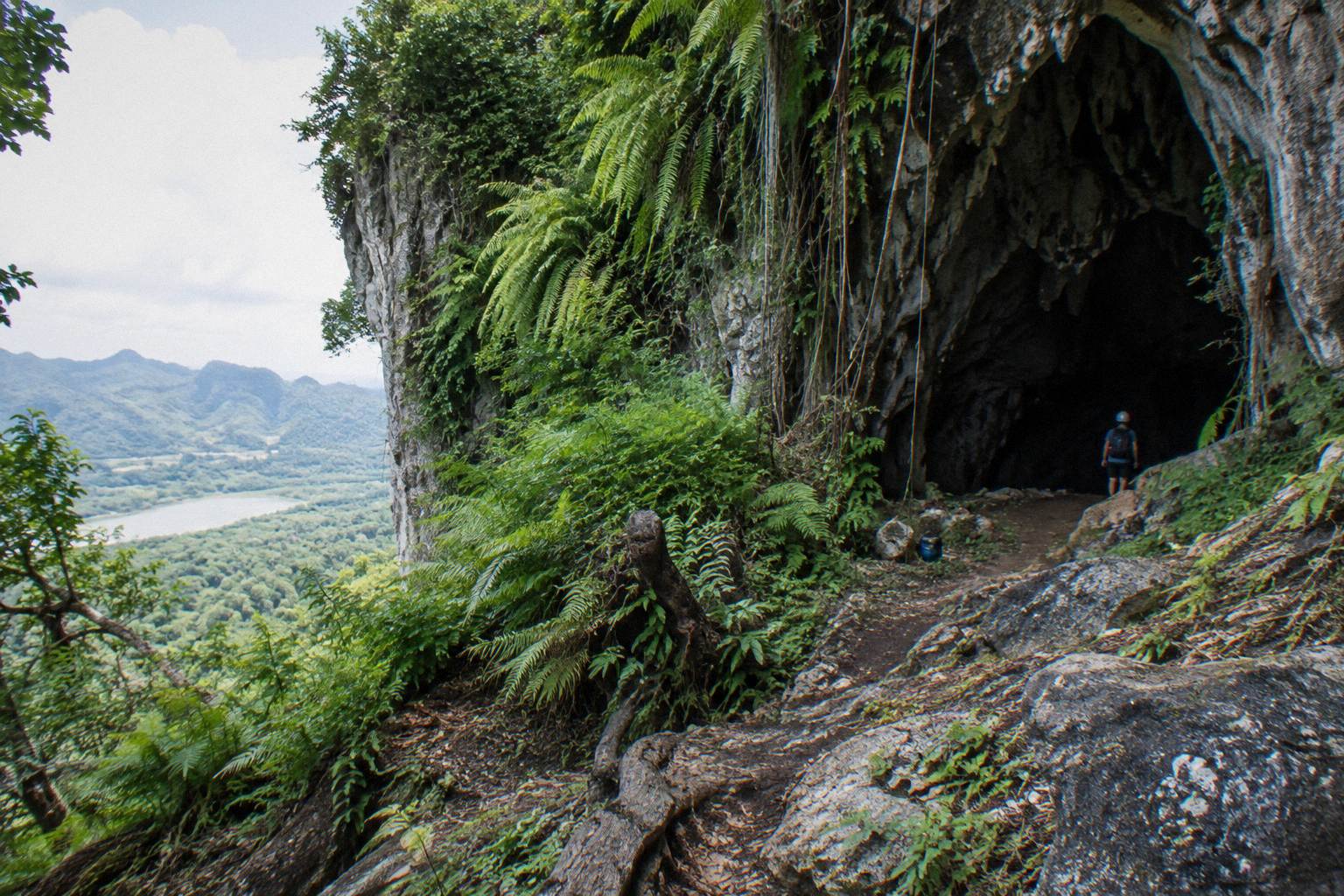
A genuine Naihehe Cave photo shows one of a short list of described features: the natural underground spring, the main chamber where the clan lived, the cannibal oven, the ritual platform, or the lantern-lit passages between them. The Fiji Times describes lantern-lit hall chambers leading through a gap into a huge chamber. A booking page lists an off-road leg, the cave visit and a BBQ lunch.
Start with the name, because photos often come attached to a claim about it. Naihehe is pronounced nigh-heh-heh, and the Fiji Times says that in the Nadroga dialect the name (or Nasese) means "to confuse or cause confusion": enemies approaching got confused or lost in the forest. One off-road safari operator says it translates to "a place to get lost". Both versions point the same way, and both belong to the cave rather than to any single photo.
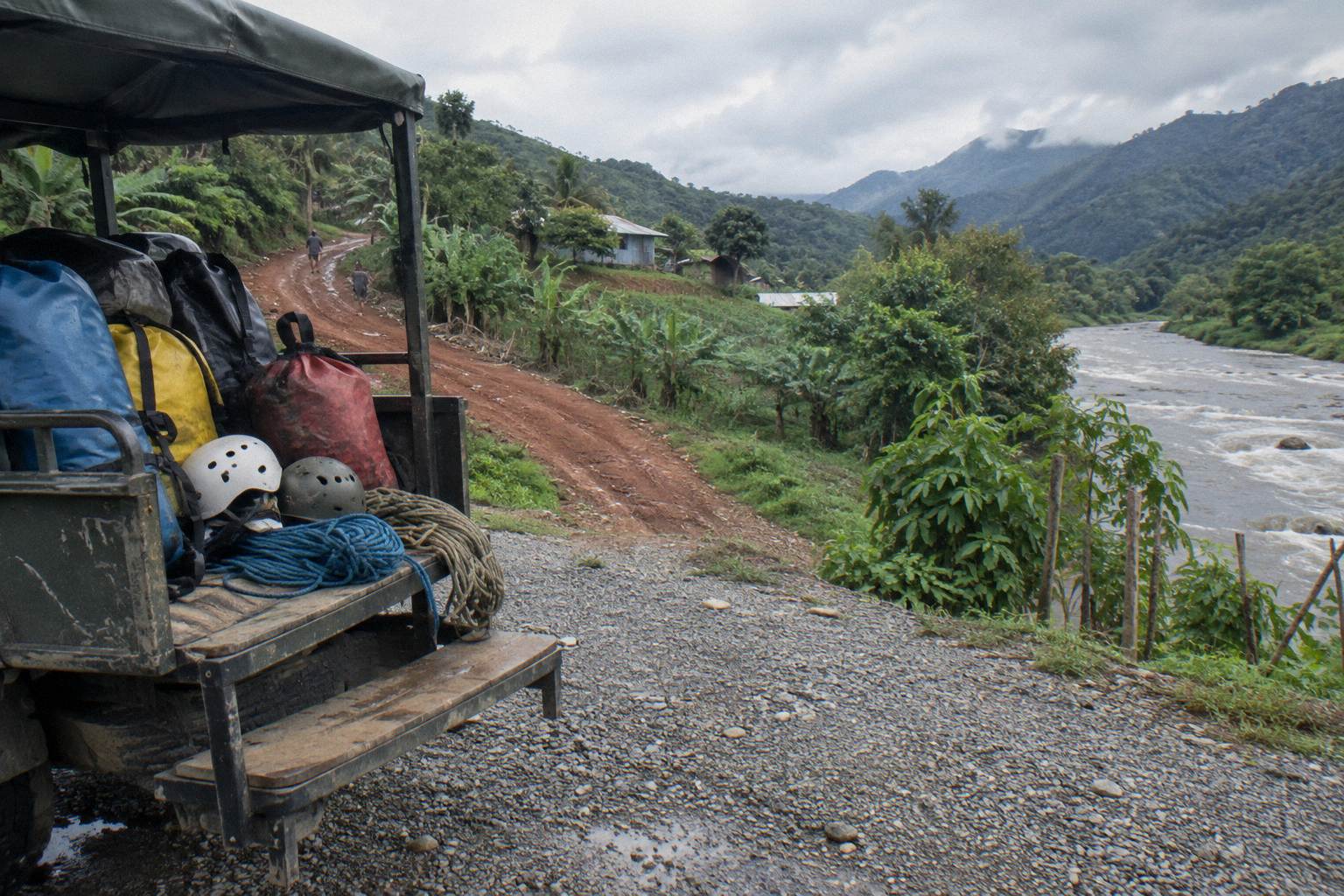
The cave itself sits in the Sigatoka Valley, inland of Sigatoka town on Viti Levu's Coral Coast side, on village land. The Fiji Times reports that the cave guardians are from Sautabu village, and that coming from Suva you turn off Kavanagasau Road just before the bridge, follow the road as it turns away from the wide Sigatoka River, and climb to the foothills above the valley. That drive is what fills the first stretch of most photo galleries: valley, river, and dirt road rising into the hills. For background on the river itself, see the Sigatoka River's page.
Inside, the sources converge on a handful of features. One operator describes the cave as Fiji's largest cave system, though it should be printed only as that operator's description. The same operator says the centrepiece is a natural underground spring, that the main chamber is where the clan lived, and that a cannibal oven and a ritual platform are seen inside. The Fiji Times adds the passage structure: lantern-lit hall chambers lead to a gap into a huge chamber. Interior photos from the safari with BBQ lunch tend to share one look: a narrow beam, wet rock, and darkness beyond the beam.
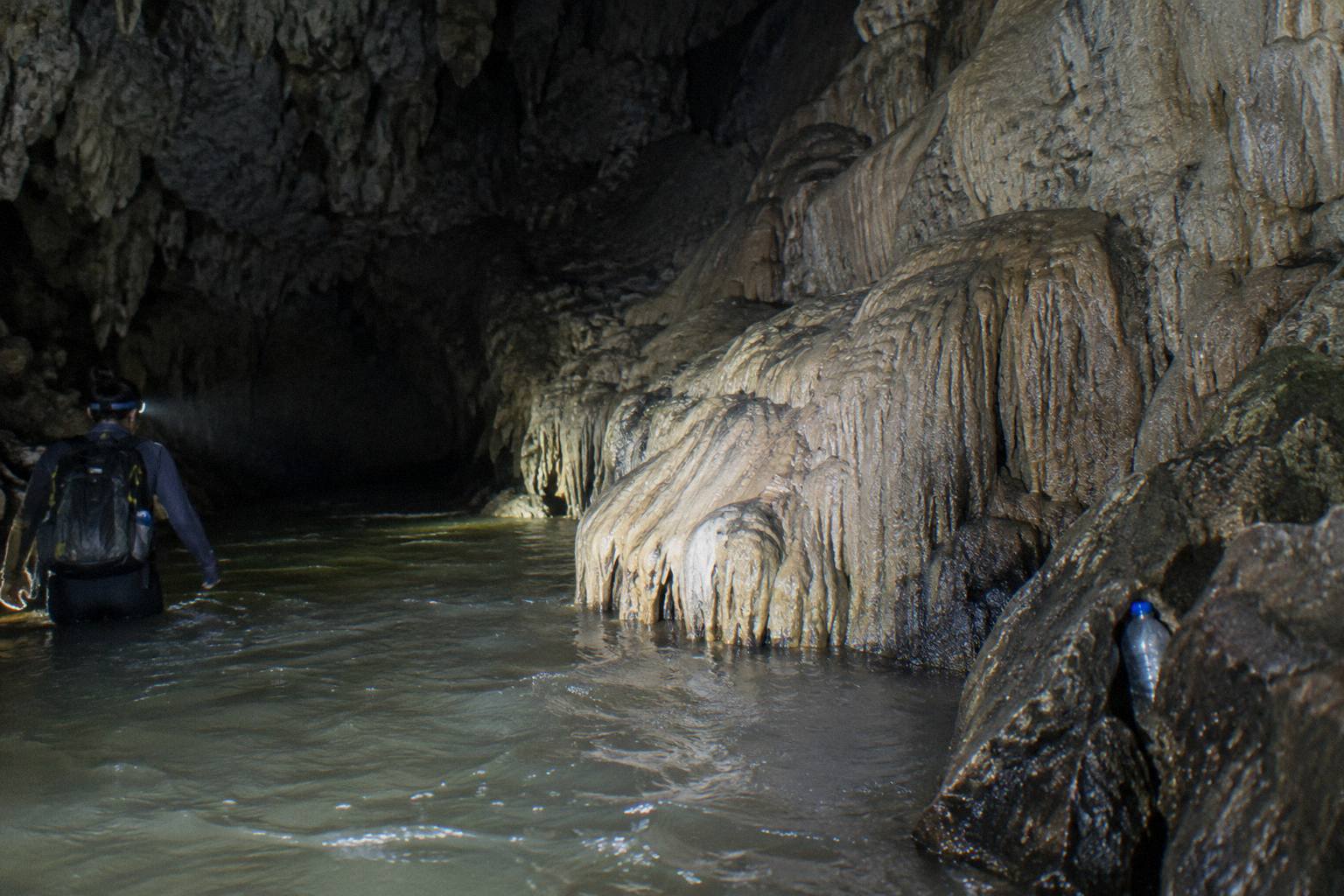
That headlight detail matters for how you read photos. There is no permanent lighting installation described by any source. Photos of brightly floodlit caverns with walkways and handrails are not describing Naihehe as the sources give it. Photos showing a beam cutting across a dark chamber, a group in helmets, or shallow water over rock are the ones consistent with the operator's physical advisory, which names wet uneven cave surfaces and mandatory safety equipment.
How The Sources Describe The Cave, Feature By Feature
Each described feature of Naihehe Cave belongs to a specific source, and keeping them straight is what separates a useful photo gallery from a misleading one. The Fiji Times supplies the history and the chambers; one operator supplies the spring, the main chamber, the oven and the platform; the booking pages supply the headlights, the boulders and the ankle-deep water. No source gives a colour, dimension or cave length.
The table gathers every described feature with the source that states it. If a photo shows something not in this list, there is no source here to support it, and the plain move is to weigh it against the booking page rather than assume it is the same cave.
| Described feature | What the source says | Source |
|---|---|---|
| The name | Naihehe (or Nasese) means "to confuse or cause confusion" in the Nadroga dialect; enemies approaching got confused or lost in the forest | Fiji Times |
| The name, operator version | Translates to "a place to get lost" | One off-road safari operator |
| Scale | Described by one operator as Fiji's largest cave system | Operator's own page |
| The centrepiece | A natural underground spring | Operator's own page |
| The main chamber | Where the clan lived | Operator's own page |
| The cannibal oven | Seen inside the cave | Operator's FAQ |
| The ritual platform | Seen inside the cave | Operator's FAQ |
| The passages | Lantern-lit hall chambers lead to a gap into a huge chamber | Fiji Times |
| Lighting on the tour | The listing does not specify the lighting used inside the cave | A booking page for the BBQ lunch safari |
| The terrain | You crouch and climb over boulders in places; you wade shallow water ankle-deep or slightly higher | Operator's FAQ |
| Equipment | Mandatory safety equipment is used in the cave | Operator's FAQ |
| The fortress story | People hid inside for months in tribal warfare; the cave mouth kept attackers from entering en masse | Fiji Times |
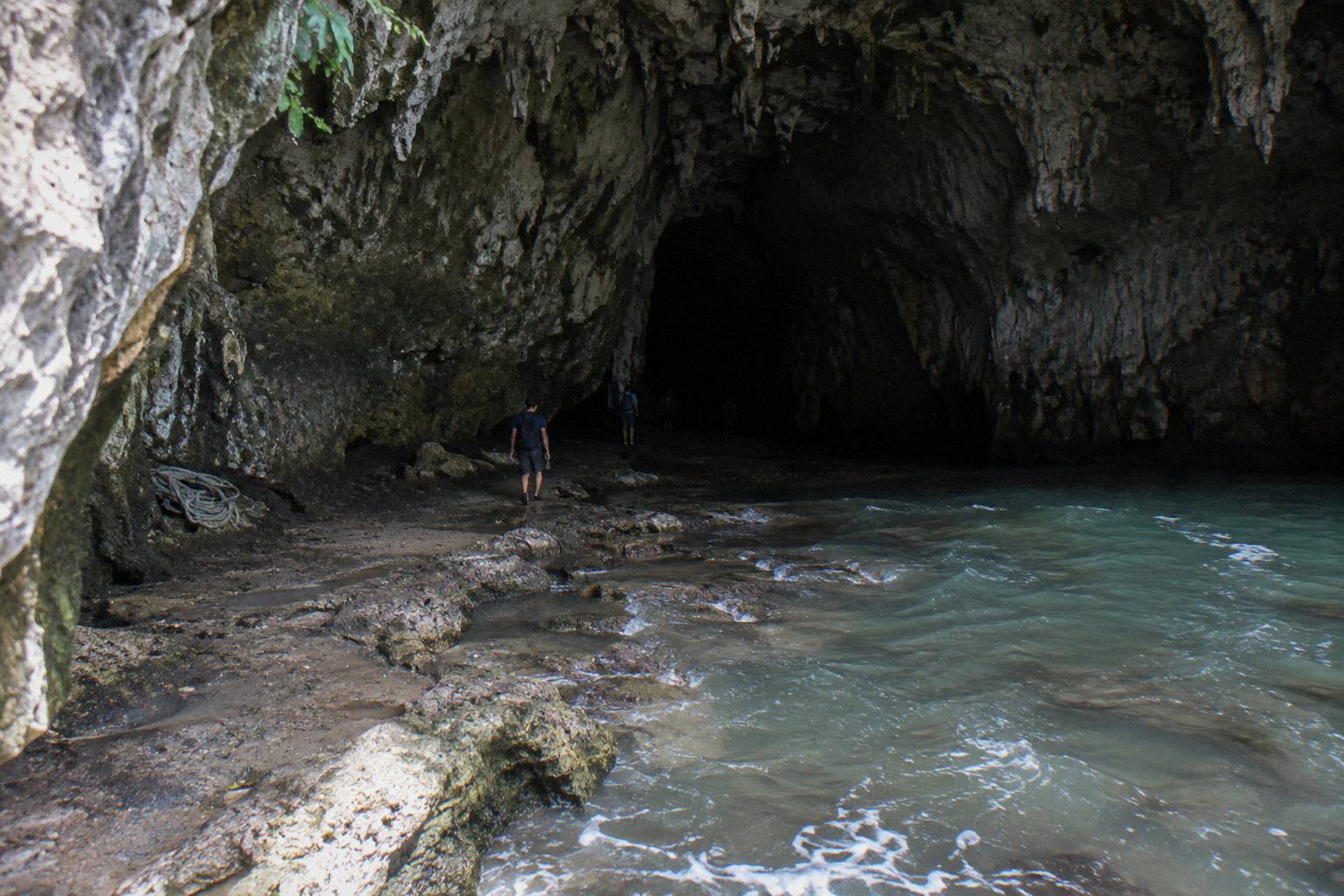
Two rows deserve a careful reading. The "pregnancy gap", the name the Fiji Times gives the squeeze into the huge chamber, is printed only inside quotes and only where it earns its place, because it is the Fiji Times' own phrase. And the fortress story belongs to the cave's role in the Little War of 1876, as the Fiji Times reports, when folklore says the cave was ruled by a bete (priest) and the high chief of Sautabu. The photos of a low, guarded mouth of rock that circulate with that story match the reporting: the mouth of the cave kept attackers from entering en masse. The wider story of that period is reported by the Fiji Times on the cave's secrets.
The history is the reason many browsers find the cave in the first place. The Fiji Times reports the cave is famed for its role in the Little War of 1876 and as the cave fortress of one of Fiji's last cannibal tribes. That is as far as the stated history goes: no other date, no head count, no cave length, no duration of hiding, and no claim about when anything ended. A photo set that gestures at more than that is adding colour the sources do not carry.
Readers who want the full walk-through of the cave's interior can follow the deeper description in what the inside of Naihehe Cave is like, and the history itself is covered in the cannibal cave story and the Little War of 1876. This page stays on the visual question: what a browser is entitled to expect from the photos, and what the photos cannot show.
Which Of The Tours Actually Reach The Cave?
Three of the eight tours covered here visit Naihehe Cave: the Naihehe cave safari with BBQ lunch, from US$138.06 per person and rated 5.0 across about 490 reviews; the Sigatoka cave and village tour, from US$99; and the cave tour with a Fijian village and local school visit, from US$181.20. The other five do not enter any cave.
This is the single most common confusion a photo gallery creates. A reader sees cave pictures on a search page, clicks the cheapest tour nearby, and books a river cruise. Five of the eight tours here are river, valley, waterfall or beach products with no cave at all: the Sigatoka river cruise and Salad Bowl valley tour, the Biausevu waterfall and Sigatoka sand dunes tour, the jet boat safari on the Sigatoka River, the seven-hour jet boat safari with lunch, and the Biausevu waterfall and Natadola beach combo. Each is a real day out; none puts you inside Naihehe.
| Tour | Price per person | Duration | Starts | Cave? |
|---|---|---|---|---|
| The Naihehe cave safari with BBQ lunch | from US$138.06 | about 4.5 hours | Meeting point in Sigatoka, 8:45am | Yes, confirmed Naihehe Cave |
| The Sigatoka cave and village tour with lunch and transfers | from US$99 | 4.5 hours | Hotel pickup across Sigatoka-area locations | Village kava ceremony, light lunch, about 45 minutes in the cave as the operator describes it |
| The cave tour with a Fijian village, local school visit and light lunch | from US$181.20 | 4 to 5 hours | Pickup from Coral Coast resorts, 8:30am | The overview names the Naihehe cave |
| The Sigatoka river cruise and Salad Bowl valley tour | from US$84 | 4.5 hours | Hotel pickup from Nadi, Denarau, Coral Coast (25 options) | No cave |
| The Biausevu waterfall and Sigatoka sand dunes tour | from US$170 | 8 hours | Pickup in Sigatoka or Nadi | No cave |
| The jet boat safari on the Sigatoka River | from US$147.59 | 4.5 hours | Hotel pickup and drop-off | No cave |
| The Sigatoka River jet boat safari with lunch | from US$182 | 7 hours | Start from Sigatoka | No cave |
| The Biausevu waterfall and Natadola beach combo | from US$161.22 | Not stated | Coral Coast pickup, per listing | No cave |
The middle row carries an honest flag. On the Sigatoka cave and village tour, the listing includes hotel transfers, a village kava ceremony and a light lunch, with about 45 minutes inside the cave as the operator describes it, time for only a handful of photos. That tour carries a 5.0 rating, but from a very small pool of 4 reviews, so the number says little on its own. The school-and-village tour has a single review so far, worth knowing before its photos sway you either way.
The safari with BBQ lunch is the one whose photos line up with the sources most directly: its booking page describes an off-road drive into the Sigatoka Valley, a guided visit inside Naihehe Cave, and a barbecue lunch with fresh fruit and juice afterwards. A gallery from that trip should show valley foothills, the off-road track, the cave interior and a BBQ lunch spread. Its 5.0 rating comes from about 490 reviews, the deepest pool of the three cave tours.
The village-and-school tour is the featured option for readers whose photos have already sold them on the culture as much as the rock. Its overview names the Naihehe cave alongside a Fijian village and a local school visit, with pickup from Coral Coast resorts at 8:30am and a light lunch included. The operator is not stated, and with just one review there is little social proof to go on, so the decision rests with the itinerary and the price. You can check availability via Village, School Visit, Light Lunch on its booking page alongside the deeper comparison in which Naihehe cave tour to book.
How The Cave Is Lit And Explored In The Photos
Interior photos of Naihehe Cave almost always show lantern light, and the Fiji Times describes the great cathedral chamber and its passages as lit the same way. No fixed lighting or walkway system is described anywhere. The operator's FAQ adds crouching, boulder climbing and wading shallow water ankle-deep or slightly higher.
That combination shapes the photography. Headlit caves photograph as pools of light with hard edges: one beam, one surface, darkness swallowing the rest. The operator's FAQ describes mandatory safety equipment used in the cave, which in similar tours means helmets and lamps, and which explains the recurring silhouette-with-lamp shot. When a gallery shows evenly lit chambers in warm light, that is not the experience the sources describe; treat it as either a different cave or a heavily worked image. The rest of the planning pages sit on Naihehe Cave Tours.
The physical advisory on the operator's own page names strenuous off-roading and wet uneven cave surfaces, and says the tour is not recommended for people with back problems or pregnancy. Its FAQ adds that the tour is generally suitable for children 5 and over. Those are that operator's terms for its own product; the booking pages of the listed tours state minimum ages differently or not at all, and the gap on the BBQ lunch safari's booking page is real: minimum age, child price and dress code are not stated there. Check the booking page for the tour you actually book.
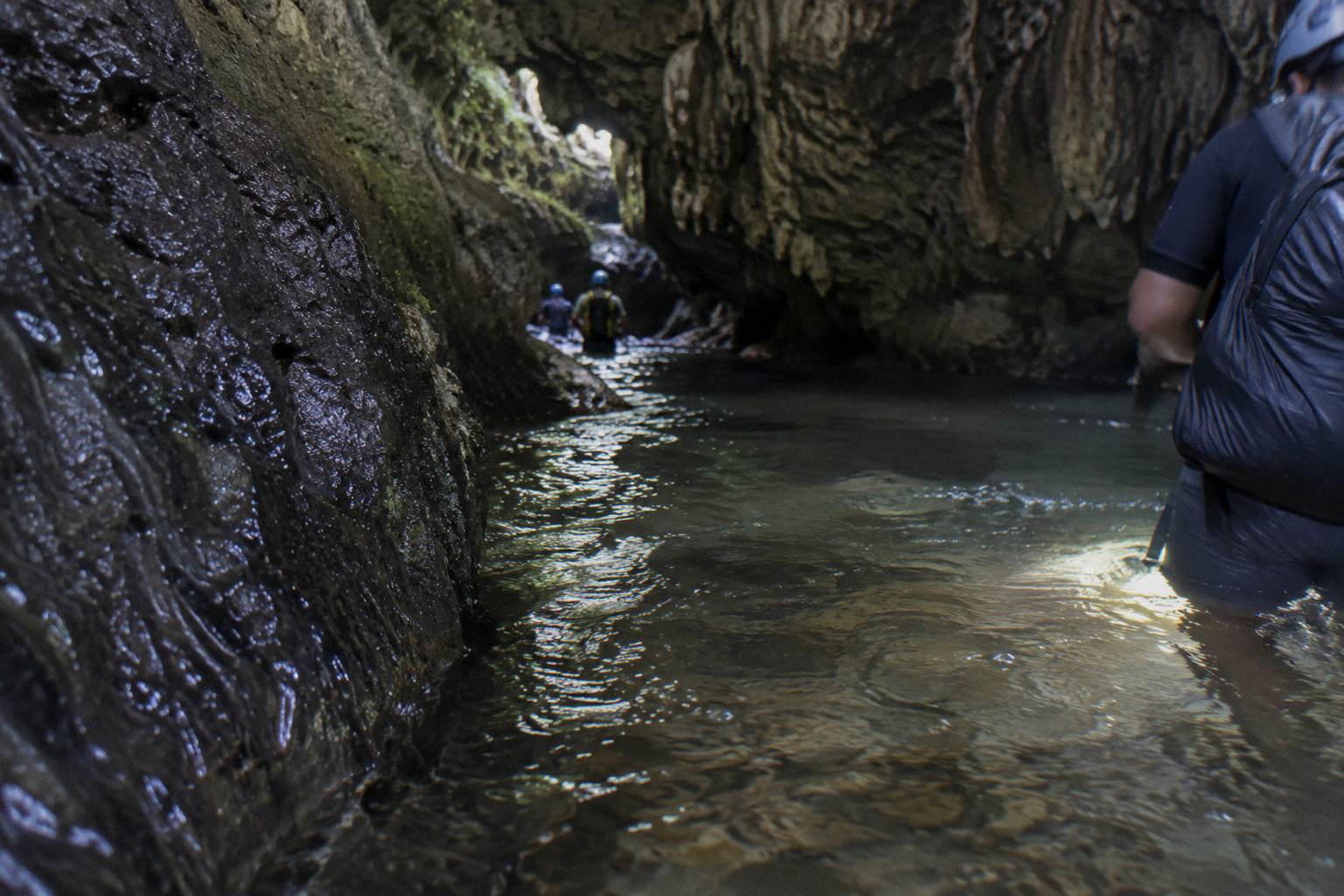
For the reader matching photos to expectations, the useful sequence is this: the off-road drive inland in daylight, then a hard cut to darkness for the cave itself. Daylight returns for the BBQ lunch at the end of the tour. An operator's own schedule describes the shape: departure from Sigatoka Town at 8:45am, an off-road leg about 9:25 to 10:05, then village, sevusevu, cave and BBQ lunch 10:10 to 12:30, with a return about 12:30 to 1:00 and an afternoon departure about 1:00pm. That is one operator's own schedule, not a fact about every tour, but it explains why cave photos dominate the middle of every gallery while the bookends are sunshine.
| Photo-gallery scene | What the sources say it shows | Red flag if the photo shows |
|---|---|---|
| Dirt road climbing into green foothills | The Kavanagasau Road turn-off and climb to the foothills above the valley, per the Fiji Times | A sealed highway or city street |
| A bowl and mat at a village house | The sevusevu kava ceremony at the home of the village priest | A staged show with tiered seating |
| Ladies wearing patterned wraps | The complimentary sulu given to ladies for the village visit | Swimwear or hiking gear inside the village |
| A single beam on wet rock | Cave visit, off-road leg and BBQ lunch, per the listing | Floodlit chambers with handrails |
| People crouching or wading | Crouching, boulder climbing and ankle-deep or slightly higher water, per the operator's FAQ | Flat paved walkways |
| A low guarded cave mouth | The mouth that kept attackers from entering en masse, per the Fiji Times | A wide, open, drive-up entrance |
| An outdoor barbecue | A BBQ lunch on the cave safari, per the booking page | Lunch or a light lunch on the other cave tours |
| A lunch table on a veranda | BBQ lunch included with the cave safari | A restaurant or buffet hall |
The Village And Sevusevu In The Photos
Many striking photos attached to a Naihehe trip are not of the cave at all but of the sevusevu, the kava ceremony at the home of the village priest, the bete. The operator states guests are welcomed as family and offered a taste of kava, ladies receive a complimentary sulu, and lunch is served at the priest's residence. The Fiji Times adds that whoever wishes to enter must seek the priest's permission.
This part of the gallery deserves the most respectful reading. The sevusevu is a courtesy the village asks of visitors, not a performance staged for cameras. The booking page for the BBQ lunch safari frames it the same way: participate in a traditional kava ceremony, meet the family who are the traditional keepers of Naihehe Cave, and seek permission to enter the cave. The Fiji Times reports that permission is accepted in a concrete house a few metres from the cave, and a guide from the bete clan takes visitors inside. A portion of each tour supports the community, the operator says, and optional small gifts or donations are appreciated, not required; tipping is at your discretion.
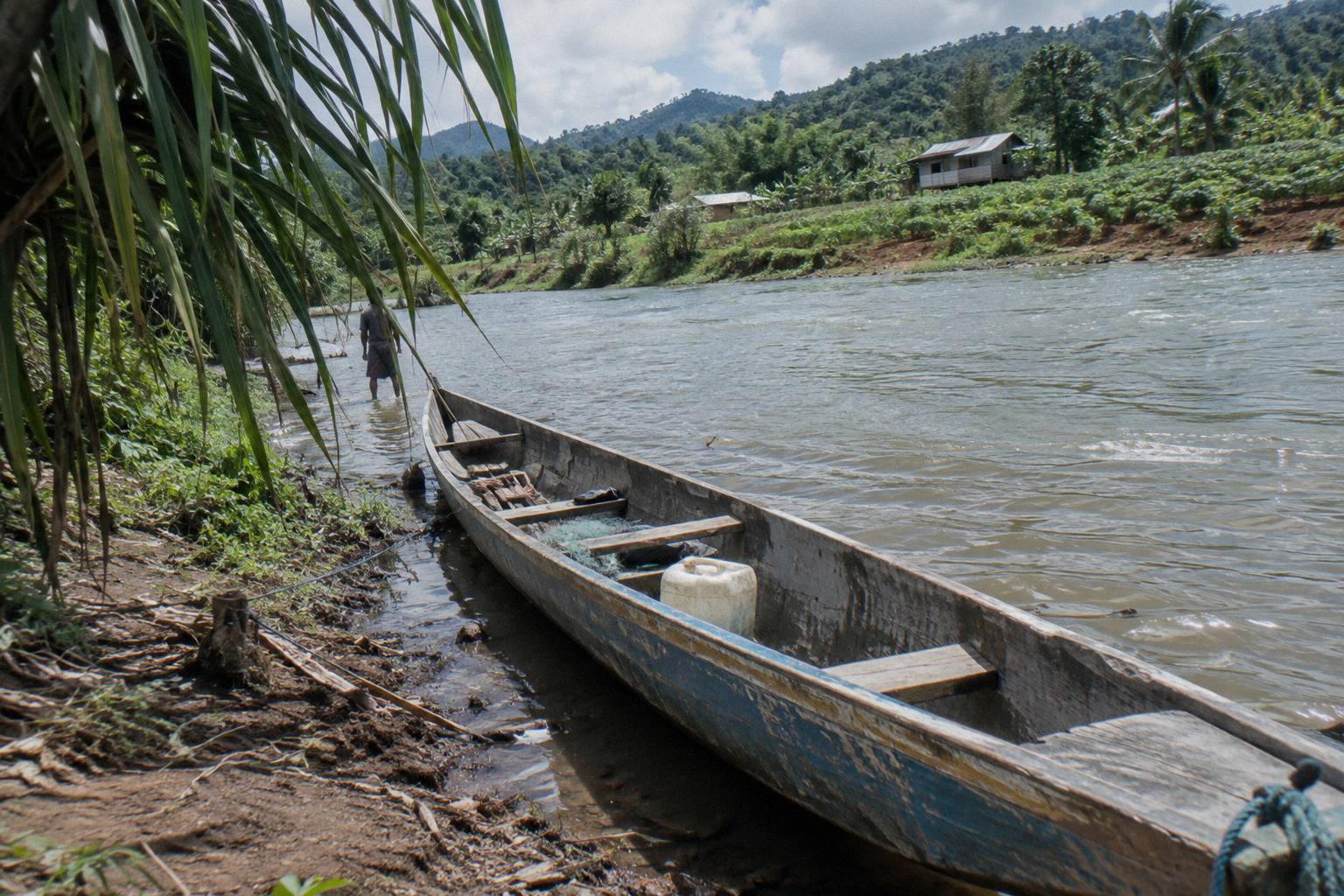
Photos that show a bowl, a mat and an older man in a shirt say more about the day than any interior shot, because they show the relationship the whole trip rests on. Ladies in the photos wearing a sulu are not in costume: the sulu is customary wear in Fijian villages, and the cave lies on village land. What the sources do not give is any dress code for the cave tours beyond that sulu, any kava quantity to bring, or any rule about visiting independently, and none of those gaps should be filled from a photo caption.
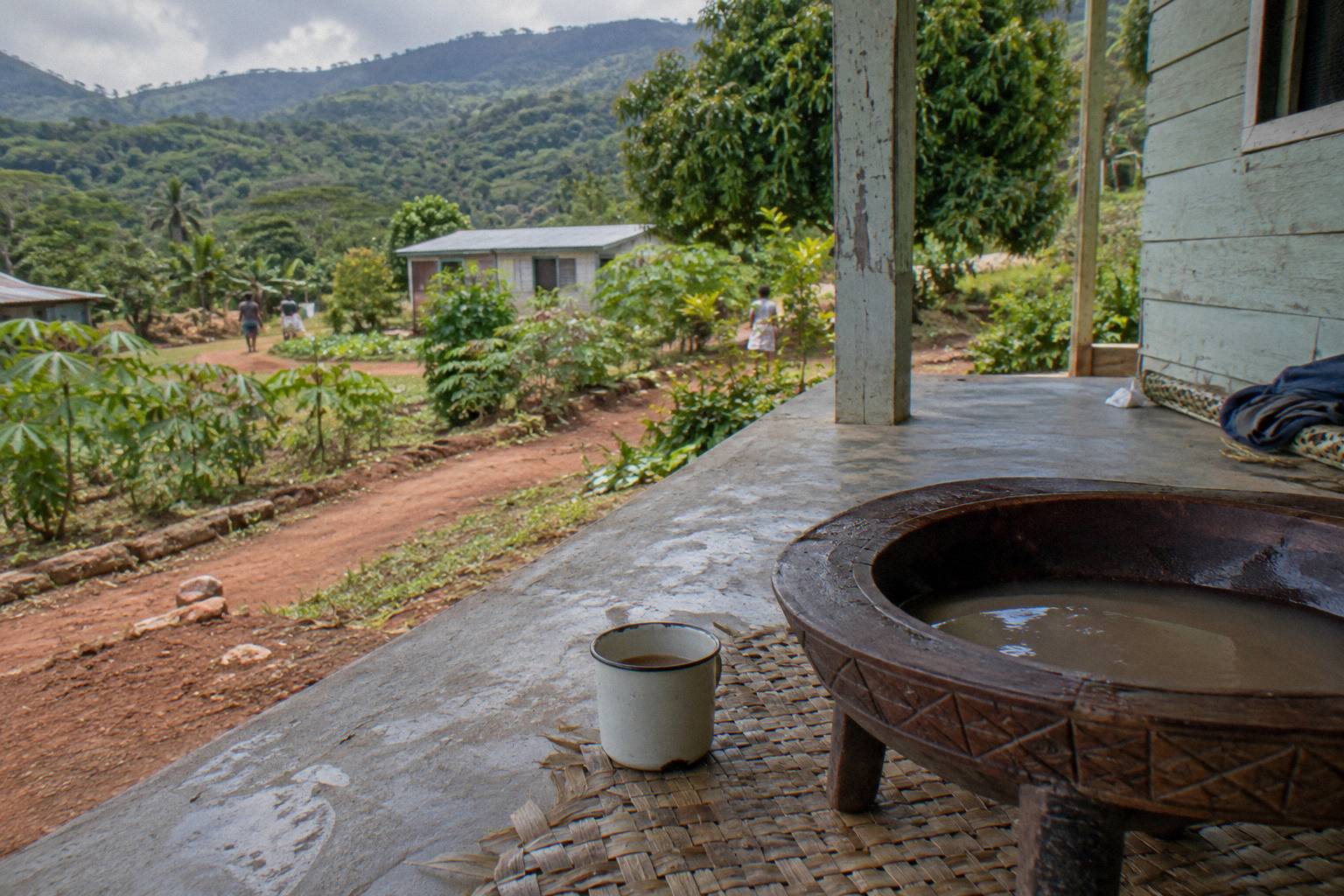
Readers deciding what to carry, from wettable footwear to a change of clothes, will find the packing detail in what to bring to a Naihehe cave tour, and the custom itself is unpacked in village and sevusevu etiquette for cave visitors. The short version for the photo reader: the ceremony comes before the cave, every time, because it is how permission to enter is sought.
What Photos Cannot Tell You
A photo cannot show river level, road state, weather, how a village receives you, or anything you are guaranteed to see inside, and none of those is promised here either. The operator's terms say the operator may cancel or amend for unforeseen circumstances including severe weather or road safety, with a full refund or reschedule typically offered. The sources give no rainfall or temperature figure for Sigatoka.
This is where honest photo-reading earns its keep. A gallery shot in the cool, dry months shows dry rock and easy footing; the same passage with water slightly higher than ankle-deep photographs almost identically. The operator's FAQ says you wade shallow water ankle-deep or slightly higher, and that is as precise as the sources get. No claim about mud, river level or road surface is stated, and none should be imported from a review or a caption.
The seasonal frame is stated, in plain terms. The Fiji Meteorological Service expects 11 to 15 tropical cyclones in its region from November 2026 to April 2027, against an average of about seven, with the wet and warm season running roughly November to April and the cool, dry season May to October, per its tropical cyclone outlook. Photos are not dated by any source here, so treat a sunny cave mouth as one day, not a promise.
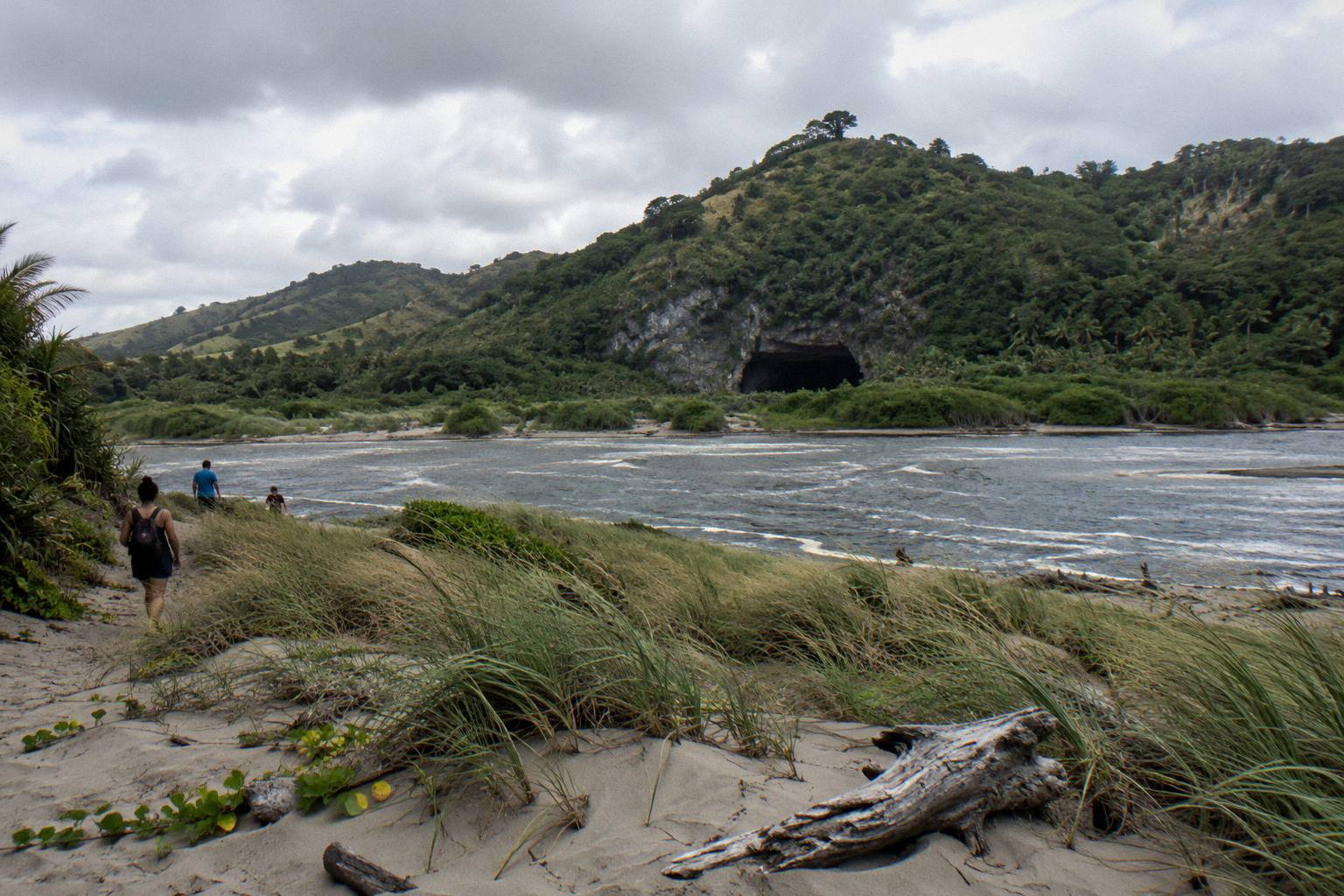
Money is the other invisible layer. The from-prices in the tables above are platform from-prices in US dollars per person, varying with date and group, and the tax question sits on top of them: whether any listed tour charges the new tax is not stated, per the Fiji Revenue and Customs Service notice. The budget picture, including the FJD 30 per adult transfer that the Sigatoka river cruise page states for Nadi and Denarau guests, is laid out in Naihehe cave tour prices, and the fine print on refunds is covered in booking and cancellation terms. One cancellation fact belongs here because a photo decision is a booking decision: a booking page for the BBQ lunch safari states free cancellation up to 24 hours before the start, and that page offers reserve now and pay later. That is stated for that safari only, not for the other cave tours.
For readers whose real interest is a broader Coral Coast day, the non-cave options have their own logic, laid out in Coral Coast tours around a cave visit and things to do in Sigatoka. The jet boat safari on the Sigatoka River, from US$147.59 per person, rated 4.9 across 1,442 reviews as the most reviewed of the eight tours covered, is a genuine alternative day if the cave photos leave you cold. It does not go to the cave.
Common Mistakes When Reading Naihehe Cave Photos
The recurring mistakes are treating a river or waterfall tour's photos as cave photos, trusting a floodlit show-cave image over the headlights-only description, assuming the cheapest cave-named tour is the same cave, and expecting photo conditions to be promised conditions. Three tours here enter a cave and five do not, and one booking page names two different caves.
The first mistake is booking on price alone. The Sigatoka cave and village tour is from US$99 per person, the cheapest of the three cave candidates, and it may well be the right choice. The 4.5-hour day covers hotel transfers, a village kava ceremony and a light lunch. Confirm which cave on the booking page before assuming its gallery is a Naihehe gallery.
The second is ignoring the lighting. If a gallery shows a lit walkway system and the sources describe headlamps, boulders and ankle-deep water, the gallery is selling a different kind of cave. The operator's physical advisory, strenuous off-roading and wet uneven surfaces, not recommended for back problems or pregnancy, is the text to weigh against the smiling helmet shots.
The third is assuming the culture segment is optional colour. The Fiji Times is direct: whoever wishes to enter the cave must seek the permission of the priest. The sevusevu is not a warm-up act; it is the reason entry happens, and photos of the ceremony itself belong to the cave's story as much as any chamber does.
The fourth is expecting the photos to carry the terms. Cancellation, minimum age, child price and what happens in bad weather all live on the booking page of the specific tour, tour by tour, and one operator's generous-sounding terms are not automatically another's. A booking page for the BBQ lunch safari states free cancellation up to 24 hours before the start; the off-road operator's own page describes fees within 24 to 48 hours; those are different documents for different products and each applies only to itself.
Common Questions About Naihehe Cave Photos
What Will Naihehe Cave Photos Show Me?
Reported sights include an underground spring, the main chamber where the clan lived, a cannibal oven and a ritual platform, and lantern-lit hall chambers opening into a huge chamber, part of the cave visit on the BBQ lunch safari.
Which Tours Actually Go Inside Naihehe Cave?
Three of the eight tours covered here: the Naihehe cave safari with BBQ lunch, the cave tour with a Fijian village and local school visit, and the Sigatoka cave and village tour, which includes hotel pickup, a village kava ceremony and a light lunch, with about 45 minutes in the cave as the operator describes it.
Is The Cave Lit Inside?
The Fiji Times reporting describes lantern-lit chambers. The safari's own listing sticks to the cave visit, the off-road leg and the BBQ lunch. No fixed lighting or walkway system is described by any source.
Can I Take Photos Inside The Cave Myself?
No source states a photography policy inside the cave. The operator's FAQ describes crouching, boulder climbing and wading shallow water with mandatory safety equipment, which sets the practical conditions; check the booking page for any camera rule.
Do The River And Waterfall Tours Include The Cave?
No. The Sigatoka river cruise, both jet boat safaris, the Biausevu waterfall and sand dunes tour and the Biausevu and Natadola beach combo are river, valley, waterfall and beach products with no cave visit.
Do The Photos Show The Kava Ceremony Too?
The sevusevu at the home of the village priest is part of the described day on the cave tours: guests are welcomed as family, ladies receive a complimentary sulu, and lunch is served at the priest's residence. It is a courtesy the village asks of visitors, and the Fiji Times states whoever wishes to enter the cave must seek the priest's permission.