
Inside Naihehe Cave: What You See On The Cave Tour
The cave fortress behind the Little War of 1876 sits inland of Sigatoka, and what you see inside it, a natural spring, a main chamber where a clan lived, a ritual platform and a cannibal oven, comes from the operator pages and the Fiji Times reporting that describe it. Here is what those sources say, and which of the three cave tours on this route actually enter.
Short answer
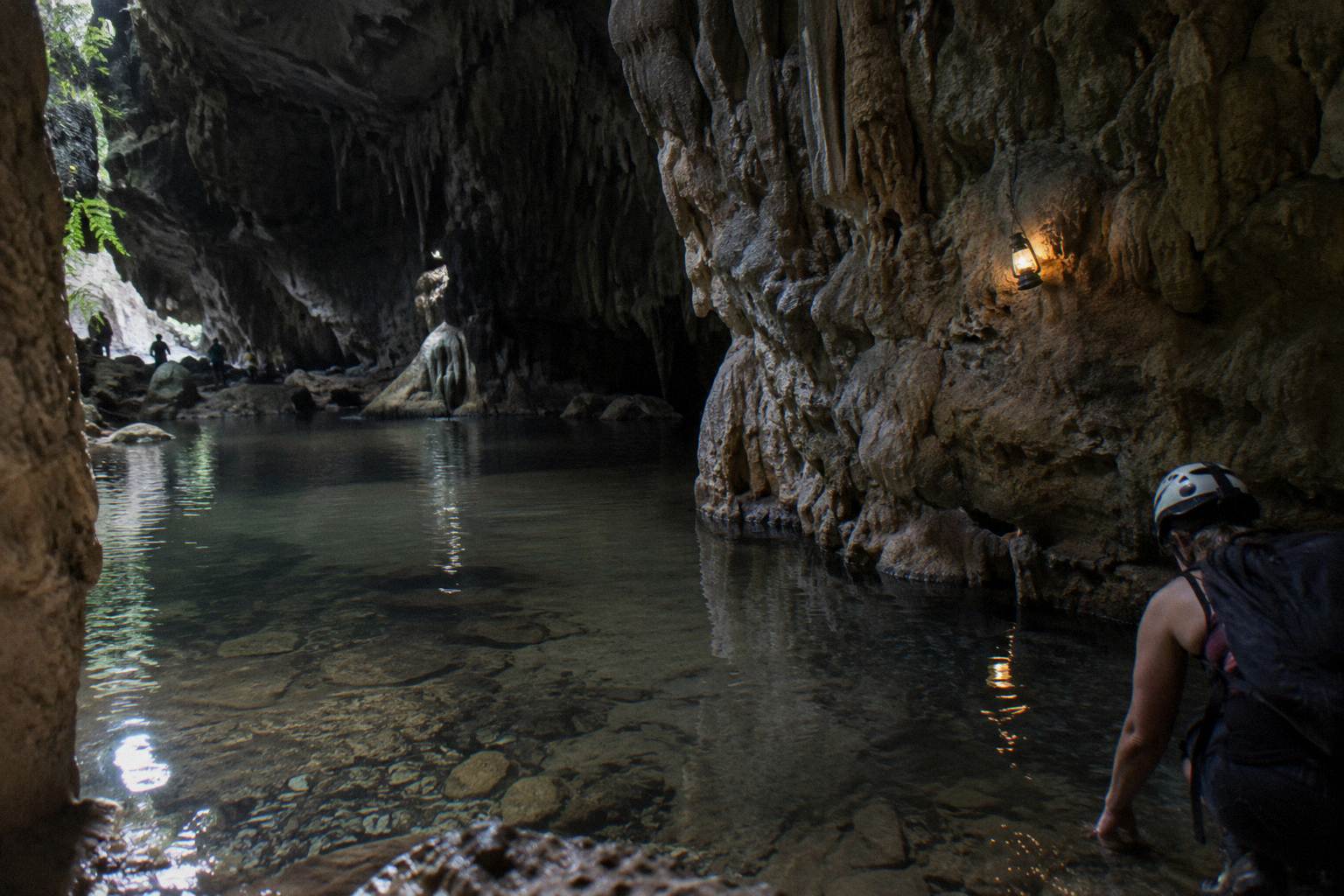
Inside Naihehe Cave, the sources describe lantern-lit hall chambers, a natural underground spring, a main chamber where a clan lived in tribal warfare days, a ritual platform and a cannibal oven. You crouch and climb over boulders, wade shallow water and use mandatory safety equipment. Three of the eight tours covered go in, from US$99 per person.
Naihehe Cave sits in the foothills above the Sigatoka Valley, inland of Sigatoka town on Viti Levu's Coral Coast, and it is one of the few places in Fiji where a booking page, an operator's own site and newspaper reporting all describe the same interior in detail. The Fiji Times calls it the cave fortress of one of Fiji's last cannibal tribes, famed for its role in the Little War of 1876, and a guide from the bete clan takes visitors through lantern-lit chambers to a huge central space. An operator's page fills in the specifics: a natural underground spring, a main chamber where the clan lived, and a cannibal oven, reached by crouching, climbing over boulders and wading shallow water.
That interior is what this page is about. Not the drive, not the village lunch, not the river crossing, but what the sources say you actually stand inside once the headlights go on. Where a source says something, it is attributed to that source, and where nothing is stated, nothing is invented here.
What Is Inside Naihehe Cave?
Naihehe Cave holds lantern-lit hall chambers that lead through a gap into a huge chamber, plus a natural underground spring, a main chamber where the Sautabu or Nabuavatu clan lived during tribal warfare days, a ritual platform, and a cannibal oven. The Fiji Times attributes its fame to the Little War of 1876, when people hid inside for months and the cave mouth kept attackers from entering en masse.
The name itself carries the story. The Fiji Times says that in the Nadroga dialect, Naihehe (or Nasese) means "to confuse or cause confusion", because enemies approaching got confused or lost in the forest. One off-road cave safari operator says the name translates as "a place to get lost". Both versions point the same way: this was a hiding place, and the terrain did the defending.
The reporting describes the structure of a visit in plain terms. Lantern-lit hall chambers lead to a gap into a huge chamber; the Fiji Times calls that gap the "pregnancy gap", a phrase worth keeping in quotes because it is theirs, not a description to be paraphrased. Folklore recorded by the paper says the cave was ruled by a bete (priest) and the high chief of Sautabu, and a guide from the bete clan takes visitors through. One operator describes the whole system as Fiji's largest cave system, which is that operator's description, not a survey figure.
Which Tours Actually Go Inside The Cave?
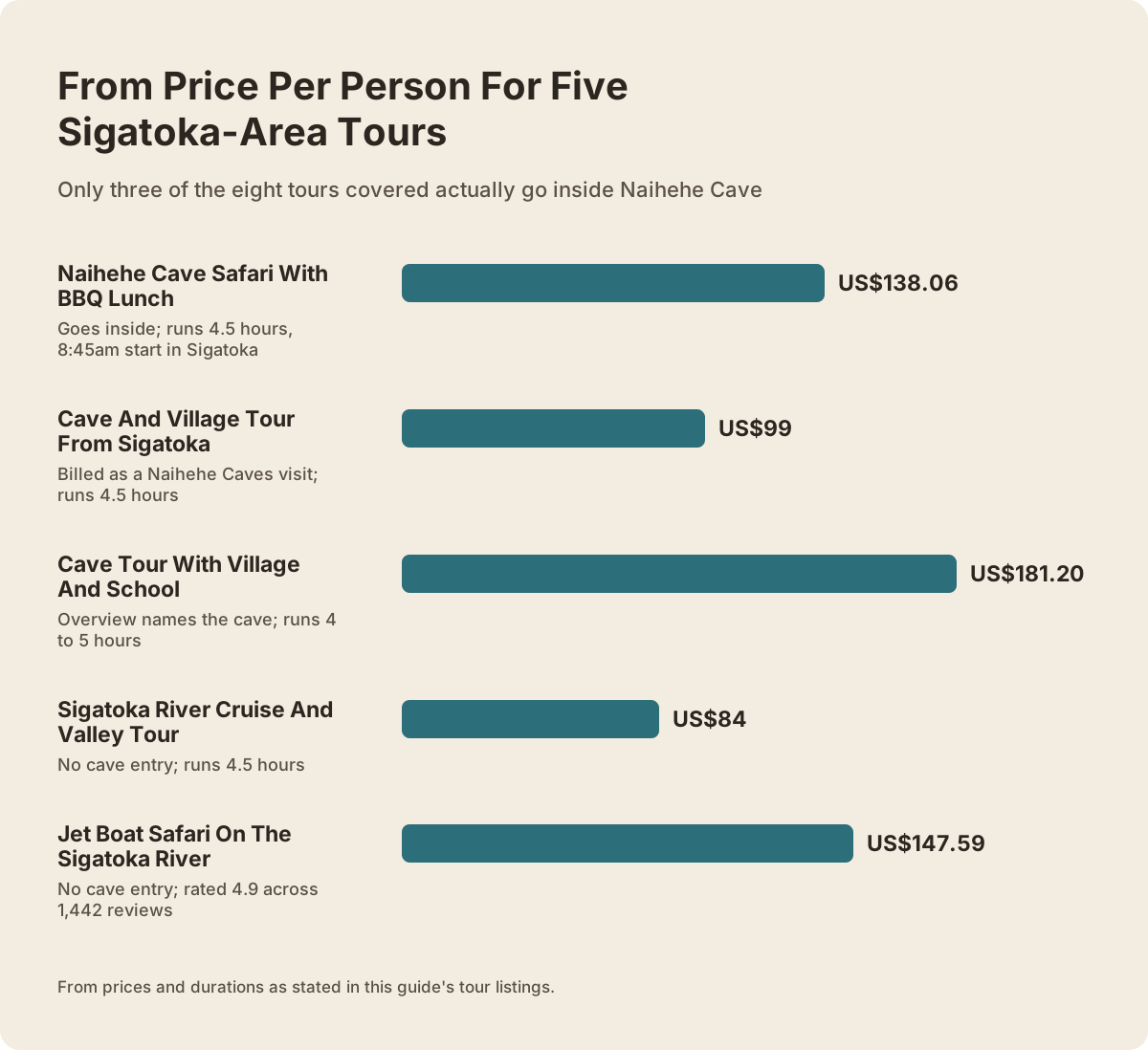
Of the eight tours covered, only three actually go inside a cave: the Naihehe cave safari with BBQ lunch (off-road, river crossing, about 4.5 hours) from US$138.06 per person, the Sigatoka cave and village tour with lunch and transfers from US$99 per person, and the cave tour with a Fijian village, local school visit and light lunch from US$181.20 per person.
The first of the three is the one whose interior details fill most of this page. The Naihehe cave safari with BBQ lunch is confirmed as a Naihehe cave tour, runs about 4.5 hours from a meeting point in Sigatoka with an 8:45am start, and is rated 5.0 across about 490 reviews. Its booking page describes an off-road ride into the Sigatoka Valley, time inside Naihehe Cave and a barbecue lunch afterwards. You can read the tour's own page at the Naihehe cave safari with BBQ lunch tour page, and a fuller walk-through of the day is in what actually happens on a Naihehe cave tour.
The second tour needs a careful caveat. The Sigatoka cave and village tour with lunch and transfers is rated 5.0 across 4 reviews, a very small count, and it is sold as a cave and village tour from Sigatoka with hotel transfers and a light lunch included. It runs 4.4.5 hours with hotel pickup from 8 listed resorts from Denarau to the Coral Coast, from $99 per person, the lowest from-price of the three cave options.
The third, the cave tour with a Fijian village, local school visit and light lunch, runs 4 to 5 hours with pickup from Coral Coast resorts at 8:30am, from US$181.20 per person. Its overview names the Naihehe cave, though the operator is not confirmed, and it has 1 review. Choosing among the three is really a question of pickup coverage and what surrounds the cave visit, which is covered in which Naihehe cave tour to book.
| Tour | Goes inside the cave? | From price | Duration | Start |
|---|---|---|---|---|
| Naihehe cave safari with BBQ lunch | Yes, confirmed Naihehe cave | from US$138.06 per person | 4.5 hours | Meeting point in Sigatoka, 8:45am |
| Cave and village tour from Sigatoka | Billed as a Naihehe Caves visit; confirm details on the booking page | from US$99 per person | 4.5 hours | Hotel pickup, 8 named resorts from Denarau to the Coral Coast |
| Cave tour with village and school | Overview names the Naihehe cave | from US$181.20 per person | 4 to 5 hours | Coral Coast resort pickup, 8:30am |
| Sigatoka river cruise and Salad Bowl valley tour | No cave | from US$84 per person | 4.5 hours | 25 pickup options, Nadi, Denarau, Coral Coast |
| Jet boat safari on the Sigatoka River | No cave | from US$147.59 per person | 4.5 hours | Hotel pickup and drop-off |
The five non-cave tours are listed here for honesty, not as substitutes. If a waterfall, a river or sand dunes is what you want, those pages cover them, but none of them puts you inside this cave, and a reader deciding on the cave interior should not book them expecting it. The jet boat safari on the Sigatoka River is the most reviewed of the eight tours covered, rated 4.9 across 1,442 reviews, and it is a fine day out on the water that simply does not include a cave.
The Sevusevu Custom Before You Enter
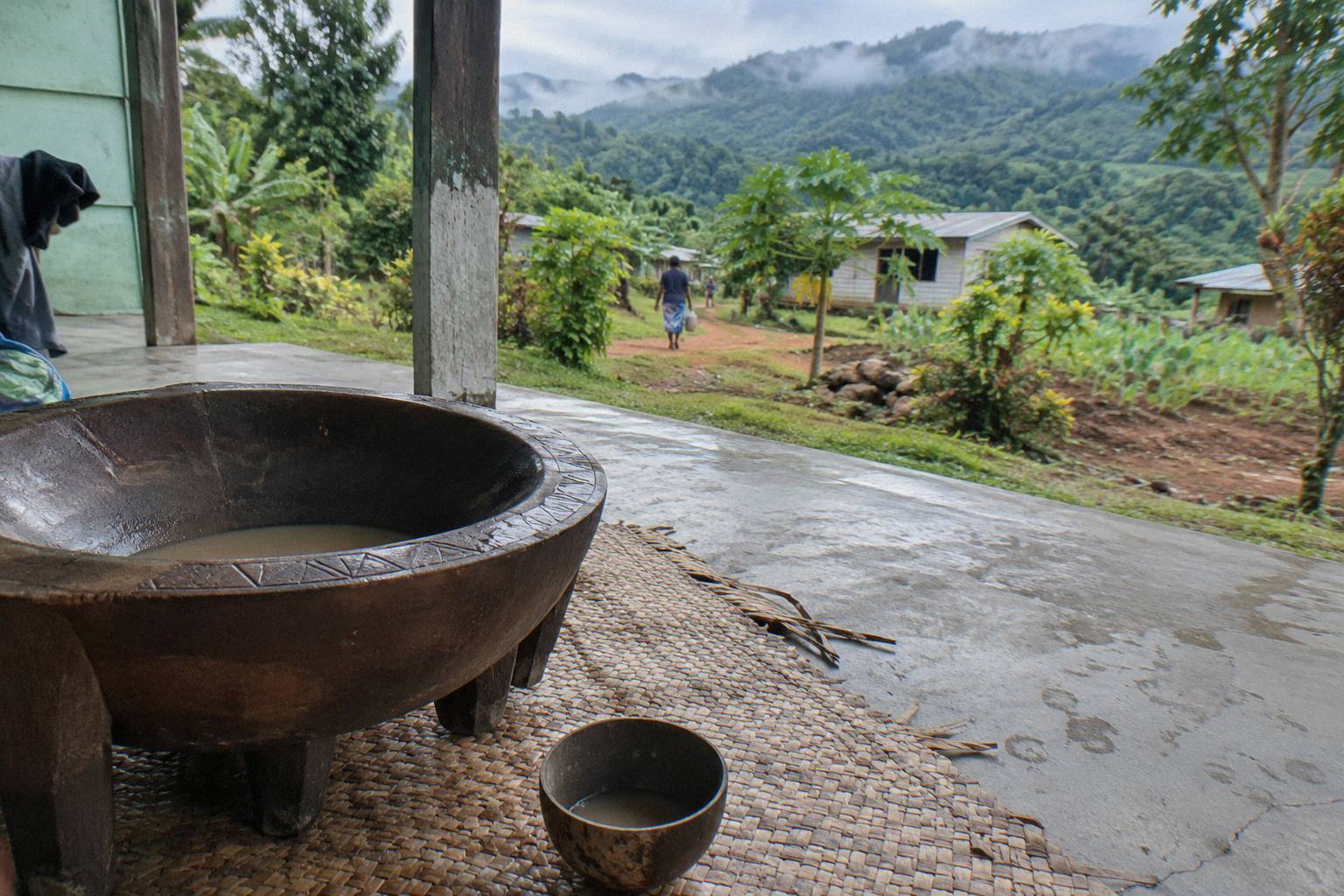
Before anyone goes inside, the group takes part in sevusevu, a kava ceremony, at the home of the village priest, the bete, whom one operator calls the cave's spiritual caretaker. The Fiji Times reports that whoever wishes to enter the cave must seek the permission of the priest, and that sevusevu is accepted in a concrete house a few metres from the cave. Village entry follows local custom, so modest dress that covers shoulders and knees is the respectful choice.
This is a courtesy the village asks of visitors, and the sources frame it that way rather than as a show. One operator states the ceremony is held for the priest's blessing, believed to keep entry and return safe, that guests are welcomed as family and offered a taste of kava, and that a portion of each tour supports the community. The booking page for the cave safari says the same thing in plainer words: participate in a traditional kava ceremony, meet the family who are the traditional keepers of Naihehe Cave, and seek permission to enter. Kava itself is optional on some village visits but no source states that for the cave ceremony, so assume nothing and follow the guide.
What is not stated anywhere: how much kava to bring, what it costs, whether independent entry is possible, or any dress rule that applies inside the cave. The fuller etiquette picture, including what a sevusevu is in village custom, is in sevusevu etiquette for a village cave tour.
The Main Chamber, The Spring And The Cannibal Oven
The centrepiece, one operator states, is a natural underground spring, alongside the main chamber where the clan lived and the cannibal oven. That operator describes the cave as a fortress for the Sautabu or Nabuavatu clan in tribal warfare days and says it played a role in ending tribal warfare over a century ago. The operator's FAQ confirms both the cannibal oven and a ritual platform are seen inside on the tour.
Three features, three functions. The spring is the reason the cave could shelter people for months: water inside means no trips to the river under watch. The main chamber is where daily life happened, per the operator's description of the clan that lived there. The cannibal oven and the ritual platform are the historic features the operator's FAQ names outright as things seen on the tour, and they should be described exactly that factually: an oven, a platform, named by the operator, printed here without embellishment.
The Fiji Times adds the defense logic: the mouth of the cave kept attackers from entering en masse, which is why a fortress in a hillside worked at all. The paper's history, the cave fortress of one of Fiji's last cannibal tribes and its role in the Little War of 1876, is the context for those interior features; it is reported history, not a haunted-house pitch, and the tour treats it that way. For background on Sigatoka, the town the cave sits inland of, see the Wikipedia page on Sigatoka; the cave's own history as covered here follows the Fiji Times reporting.
| What is described inside | Source for the description |
|---|---|
| Lantern-lit hall chambers leading to a gap into a huge chamber | The Fiji Times |
| The gap called the "pregnancy gap" | The Fiji Times, quoted phrase |
| Natural underground spring, main chamber where the clan lived | One operator's page |
| Cannibal oven and ritual platform seen inside | The operator's FAQ |
| Cave fortress of one of Fiji's last cannibal tribes, Little War of 1876 | The Fiji Times |
| Fortress for the Sautabu or Nabuavatu clan, role in ending tribal warfare over a century ago | One operator's page |
| Off-road leg, cave visit and BBQ lunch | A booking page for the cave safari |
| Described as Fiji's largest cave system | One operator, as its own description |
The Village, The School And The Lunch Around The Cave Visit
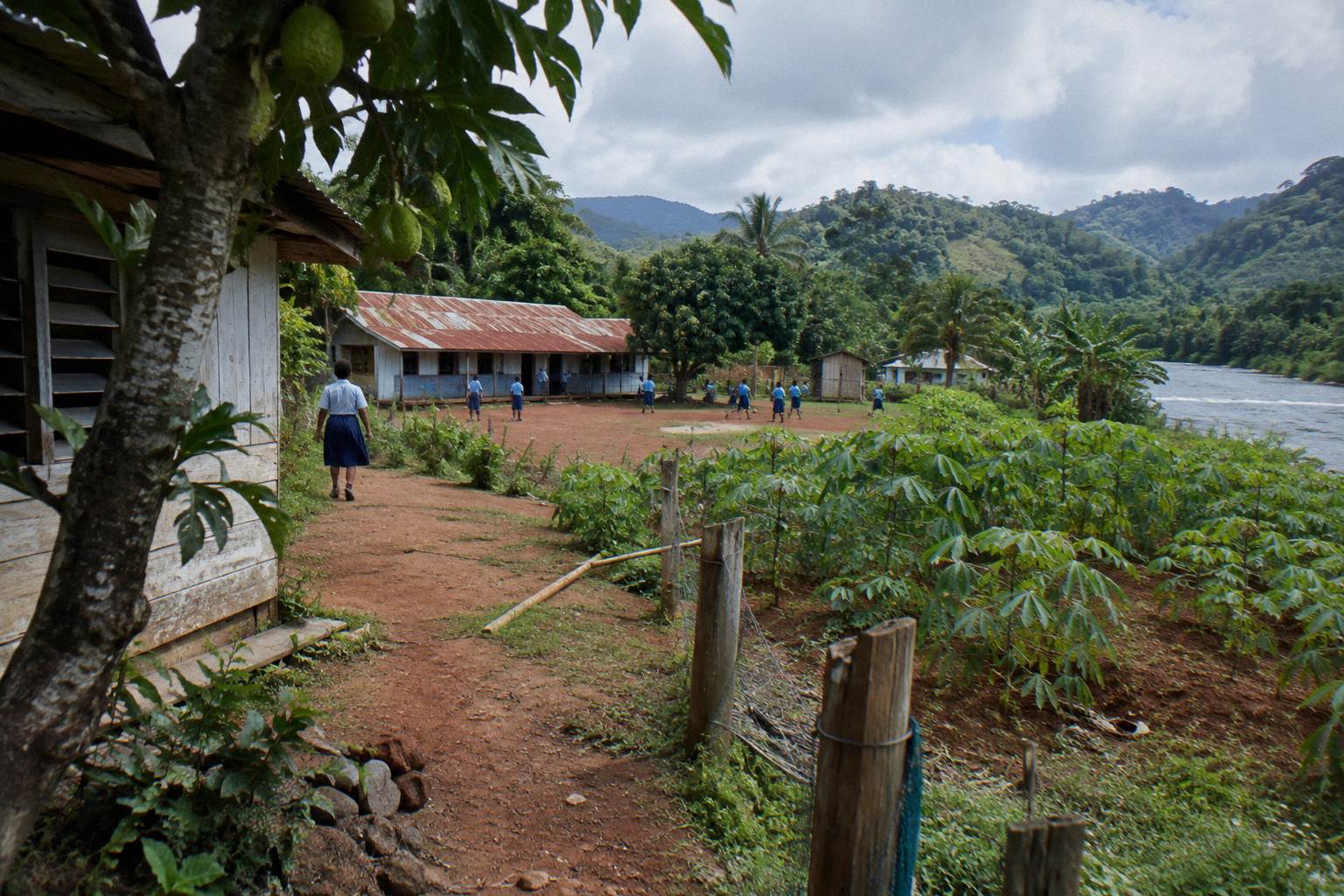
None of the three cave tours is a cave-only product. The safari pairs the cave with a BBQ lunch on a trip inland through the Sigatoka Valley. The village and school tour adds a Fijian village, a local school visit and a light lunch, while the transfers tour covers lunch and hotel pickup. Which add-ons matter to you is often the deciding factor between them, more than the cave itself, since the cave interior is the same draw.
The safari's booking page lists its inclusions plainly: the off-road vehicle ride up the valley, the guided cave exploration, and a barbecue lunch. That is the shape of the 4.5-hour day, a bumpy run in, time underground, then food before the drive back. That is the fullest package of the three, and its from price of US$138.06 per person sits between the other two. Its review base, 5.0 across about 490 reviews, is by far the deepest of the three cave tours.
The cave tour with a Fijian village, local school visit and light lunch, from US$181.20 per person, is the one that adds the school stop, and it is the only one of the three that picks up from Coral Coast resorts at a stated 8:30am time. The Sigatoka cave and village tour with lunch and transfers, from US$99 per person, is the budget and pickup option, collecting guests at 8 resorts from Denarau to the Coral Coast. The listing includes hotel pickup, a village kava ceremony, and a light lunch, with about 45 minutes in the cave as the operator describes it. Deciding between Coral Coast pickups and a Sigatoka meeting point is covered in Naihehe cave tours from Coral Coast hotels.
Headlights, Boulders And Water Underfoot
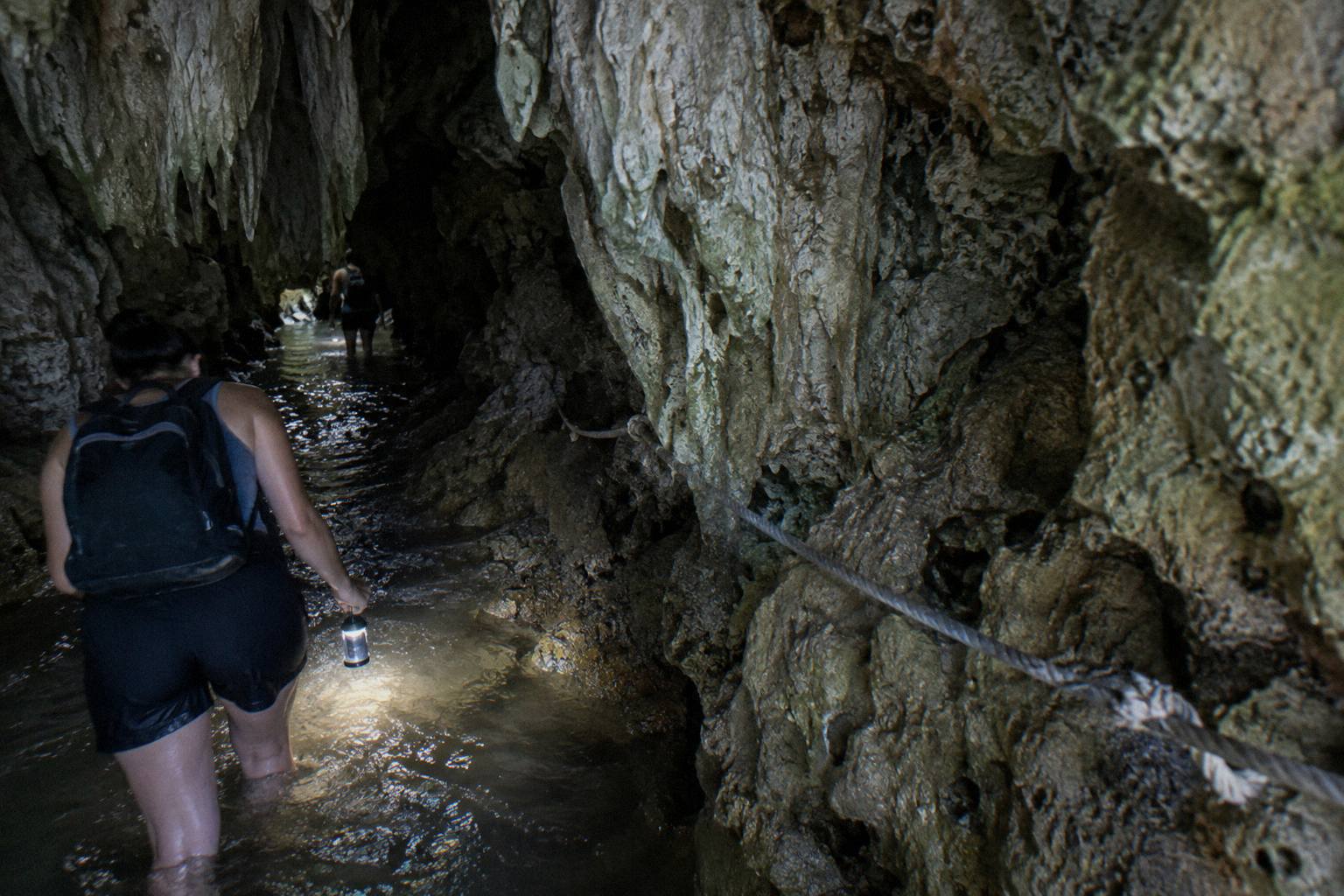
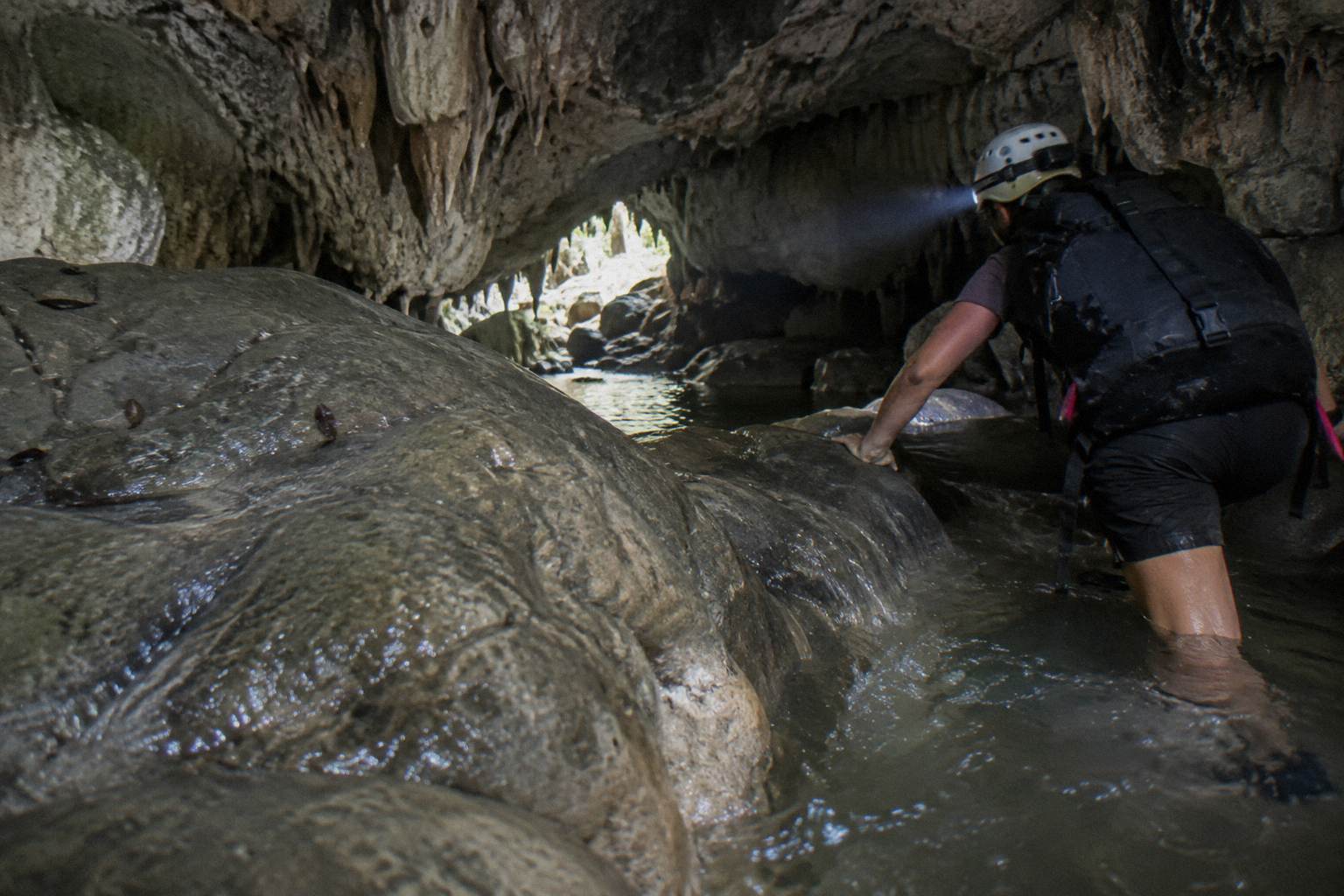
The operator's FAQ says the cave requires moderate fitness: you crouch and climb over boulders in places, wade shallow water ankle-deep or slightly higher, and mandatory safety equipment is used inside. The cave safari listing pairs the cave visit with an off-road drive and a BBQ lunch. The operator's physical advisory adds strenuous off-roading and wet, uneven cave surfaces, and says the tour is not recommended for people with back problems or pregnancy.
This is the plain physical description, and it is worth reading closely. Crouching and boulder-hopping in a limestone cave with water underfoot is normal caving terrain, but it is not a boardwalk, and the wet surfaces are named in the operator's own advisory. The same advisory says the tour is generally suitable for children 5 and over, and the operator suggests bringing wettable footwear and a change of clothes, which is advice worth taking at face value: whatever you wear inside will get wet at least to the ankle.
No safety statistics, injury figures or accident history are stated, because none exist in the sources, and none are needed to make the decision. The question is simply whether moderate fitness, tight passages and ankle-deep water sound fine to you, and the safety picture in full, including the operator's cancellation terms, is in is Naihehe cave safe. For packing, what to bring to a Naihehe cave tour carries the operator's own list.
The Shape Of The Day On The Safari
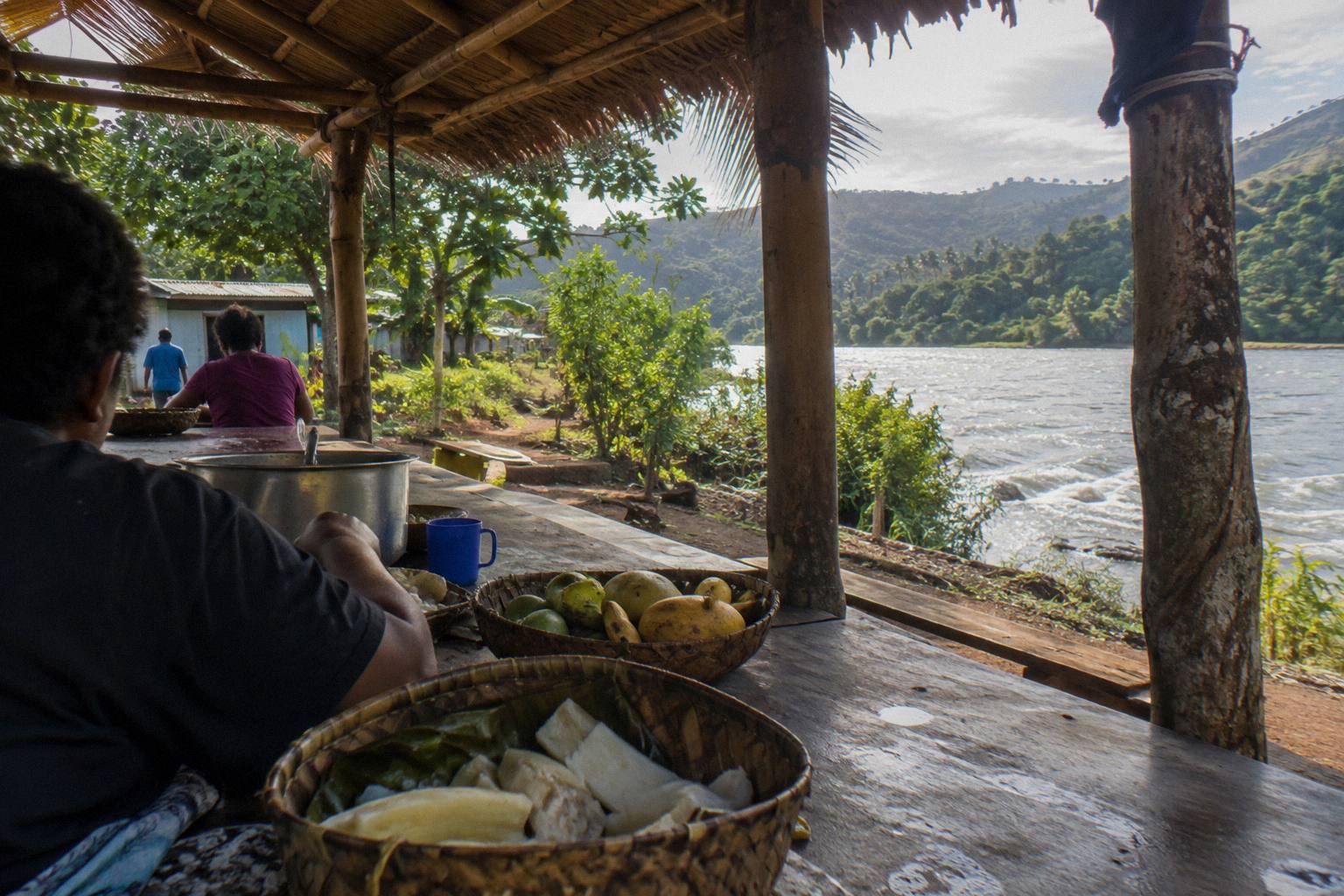
Depart Sigatoka Town 8:45am, off-road leg 9:25 to 10:05, village and sevusevu, cave and BBQ lunch 10:10 to 12:30, optional swim, back 12:30 to 1:00, afternoon departure about 1:00pm. Core tour: 4.5 to 5 hours; with return transfers from Nadi, Denarau or the Coral Coast, 6 to 8 hours. Operates Monday to Saturday.
That schedule is that operator's own, and it is stated here as such, never as a fact about every tour. It is still the most useful single picture of how a cave day is built: an off-road leg into the valley, the cave visit itself, and a BBQ lunch, all inside a 4.5-hour outing, so the cave is one block of a longer day, not the whole of it. The booking page for the safari puts the whole trip at 4.5 hours, which matches the core figure.
| Segment of the day | Operator's stated timing |
|---|---|
| Depart Sigatoka Town | 8:45am, Monday to Saturday |
| Off-road leg | About 9:25 to 10:05 |
| Village and sevusevu | Before the cave entry |
| Cave and BBQ lunch | 10:10 to 12:30 |
| Optional swim, return | About 12:30 to 1:00 |
| Afternoon departure | About 1:00pm |
| Core tour length from Sigatoka Town | About 4.5 to 5 hours |
| With transfers from Nadi, Denarau or Coral Coast | 6 to 8 hours depending on resort |
The pickup question matters most for readers staying outside Sigatoka. The safari's listing gives a meeting point in Sigatoka, while the operator's own page mentions return transfers from major resorts; the transfer price for that leg is not stated, so check the booking page. The village and school tour states Coral Coast pickup at 8:30am, and the transfers tour lists its 8 pickup locations on its booking page. If you are starting in Nadi, getting from Nadi to Sigatoka for the cave tour works through the pickup options tour by tour.
If your day cannot fit a cave tour at all, the jet boat safari on the Sigatoka River is the most reviewed of the eight tours covered, 4.9 across 1,442 reviews, from US$147.59 per person, but it does not go inside the cave; it is a river day, not a cave day, and it should be booked as one.
Common Mistakes When Booking To Go Inside Naihehe Cave
The mistakes that trip readers up are booking a river or waterfall tour and expecting a cave, assuming the cheapest cave listing is Naihehe without reading the description, ignoring the physical advisory about boulders and ankle-deep water, and skipping the sevusevu explanation so the village stop feels like a delay. All three cave tours go inside a cave; only one is confirmed as Naihehe by its booking page, and one names two different caves on the same page.
Read the description, not the summary. The transfers tour is the working example: hotel pickup, a village kava ceremony, a light lunch, and about 45 minutes in the cave as the operator describes it. That is not a reason to skip the tour; it is a reason to open the booking page and check which cave it enters before you pay. Its 4 reviews and 5.0 rating are real but very small, and a 5.0 from four people should carry less weight than 5.0 from about 490 on the safari.
Second, respect the fitness line. Moderate fitness, crouching, boulders and ankle-deep water are the operator's own words, and the advisory about back problems and pregnancy is stated on the operator's page. Third, treat the sevusevu as part of the tour, not a queue. The Fiji Times line that whoever wishes to enter must seek the permission of the priest is the whole frame: the village opens its cave, and the ceremony is how that happens. Fourth, remember that a wet season day can change plans; operators can cancel or amend for severe weather or road safety, the off-road operator's terms say, with a full refund or reschedule typically offered, and no operator promises the weather.
How The Cave Tour Fits A Sigatoka Day
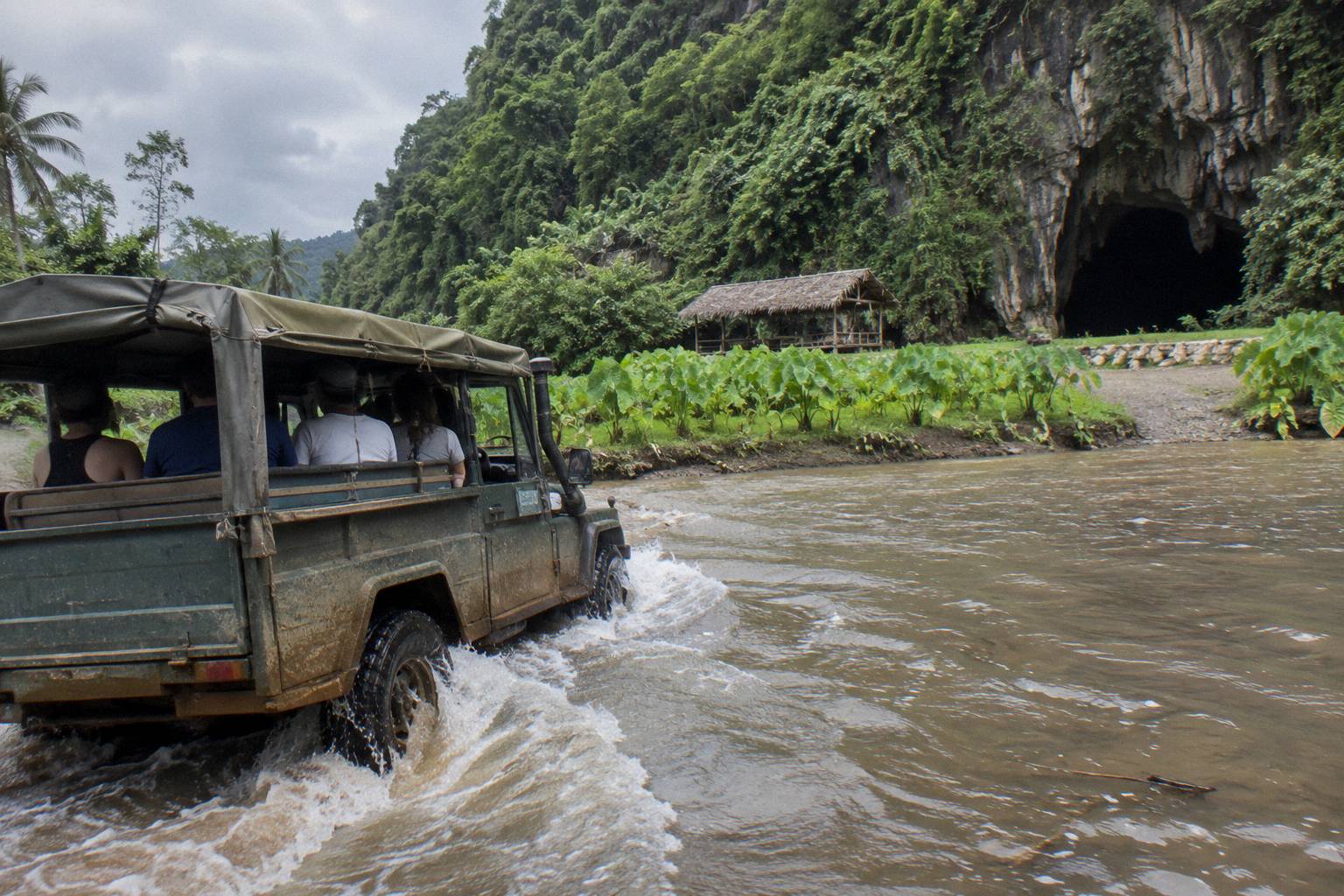
The cave tour fits a Sigatoka day easily because the site sits inland in the Sigatoka Valley, reached, as the Fiji Times describes, by taking the Kavanagasau road just before the bridge coming from Suva and following it as it leaves the wide Sigatoka River and climbs to the foothills; the listing for the cave safari with BBQ lunch describes an off-road drive into the valley followed by the cave visit and lunch, so there is little extra travel to plan around.
Sigatoka itself is a small town on the Coral Coast, south of Nadi, and the tours that pick up from Nadi, Denarau and Coral Coast hotels are listed tour by tour in the listings: the river cruise with 25 pickup options, the jet boats, the waterfall tours. The cave options are narrower, one meeting point, one Coral Coast pickup, one transfer listing, which is why the pickup column in the table above matters as much as the price column. What the town itself offers around a cave day is laid out in things to do in Sigatoka with a cave tour.
The underwater spring, the chamber and the oven are the reason to pick this over a beach day; the sevusevu, the lunch and the village are what make it a Fijian day rather than a spelunking one. That balance is the product, and the sources above are everything verified about it. When you are ready, Naihehe Cave Tours keeps the live listings for all three cave options side by side.
Common Questions About Inside Naihehe Cave
What Do You Actually See Inside Naihehe Cave?
Per one operator's page and FAQ: a natural underground spring, the main chamber where the clan lived, a cannibal oven and a ritual platform. The Fiji Times adds lantern-lit hall chambers leading through a gap into a huge chamber, with a guide from the bete clan taking visitors.
Is The Cave Explored In The Dark?
The listing for the cave safari describes an off-road leg into the valley, time inside the cave, and a BBQ lunch. Mandatory safety equipment is used in the cave, the operator's FAQ states.
How Fit Do You Need To Be?
The operator's FAQ says moderate fitness: you crouch and climb over boulders in places and wade shallow water ankle-deep or slightly higher. The operator's advisory names wet, uneven cave surfaces and does not recommend the tour for people with back problems or pregnancy.
Which Tours Go Inside Naihehe Cave?
Three of the eight tours covered: the cave safari with BBQ lunch (confirmed Naihehe cave), the Sigatoka cave and village tour with lunch and transfers (a cave and village tour from Sigatoka, with hotel pickup, a village kava ceremony and about 45 minutes in the cave as the operator describes it), and the cave tour with a Fijian village and local school visit (overview names the Naihehe cave).
Do You Take Part In A Kava Ceremony Before Entering?
Yes. One operator states the group takes part in sevusevu at the home of the village priest for his blessing before entering, and the Fiji Times reports that whoever wishes to enter the cave must seek the permission of the priest. Women should dress modestly for the village; check the listing for any sulu or dress code notes.
Can You Swim Inside The Cave?
No source states a swim inside the cave. The wading described is shallow water, ankle-deep or slightly higher, per the operator's FAQ. The safari's booking page lists a swim in the Sigatoka River, outside the cave, and the operator mentions a chance to swim in a freshwater pool or river.